Hit by a Bi-State (Metro) Bus in St. Louis? What to Do Next
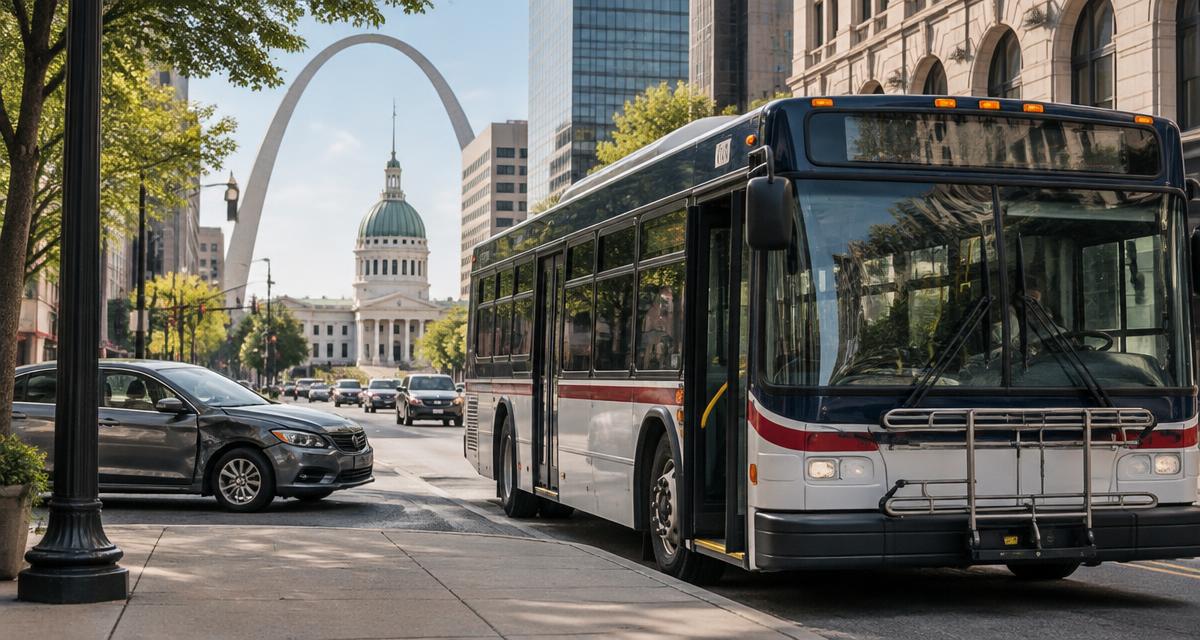
A collision with a city bus is frightening enough on its own. But in the St. Louis region, a crash involving a MetroBus carries a complication most drivers do not expect: the bus is operated by a government agency, and claims against government agencies play by different rules — including deadlines that arrive far sooner than the ordinary statute of limitations.
Here is what to know and what to do if you are hit by a Bi-State Metro bus, whether you were driving another vehicle, riding as a passenger, or struck as a pedestrian.
First: Who Operates the Bus
MetroBus is operated by Metro Transit, which is run by the Bi-State Development Agency — an interstate compact agency created by Missouri and Illinois in 1949 and ratified by Congress. It operates the region's public transportation system across St. Louis City, St. Louis County, and parts of Illinois. That government status is exactly why the claims process differs from a crash with a private driver.
At the Scene: Protect Yourself and the Evidence
1. Call 911. Get police and paramedics to the scene, even if injuries seem minor. A police report creates an official record of what happened, where, and who was involved — and you will need the report number later.
2. Get medical help. Adrenaline masks injuries. Let paramedics evaluate you, and get checked at an emergency room or urgent care the same day if you have any symptoms. Gaps in treatment give the agency's adjusters room to argue you were not really hurt.
3. Document the bus. Write down or photograph the bus number (displayed on the bus), the route number and name, the direction of travel, and the driver's name or badge number if you can get it. Photograph the scene from multiple angles: vehicle positions, damage, skid marks, traffic signals, and road conditions.
4. Get witnesses. Bus crashes often have witnesses — other passengers, pedestrians, nearby drivers. Ask for names and phone numbers. Witnesses disappear fast, and their accounts can be decisive.
5. Say little about fault. Keep your statements factual. Do not guess about what happened, do not apologize or accept blame, and do not agree to a recorded statement for the agency's claims adjusters before speaking with a lawyer.
The 180-Day Notice: The Deadline Most People Miss
This is the step that surprises people. Missouri generally gives you five years to file a personal-injury lawsuit (Mo. Rev. Stat. § 516.120). But Metro's own Notice of Claim form — the form the agency uses for claims against it — instructs that it be completed, signed, and mailed or delivered within 180 days of the incident. The form asks for the date, time, and location of the incident, the bus or train number, boarding and exit locations, the police report number, witness information, and a description of the incident and injuries.
Do not assume the five-year lawsuit deadline is the deadline that matters. The notice deadline is far shorter, and missing it can jeopardize your claim before a lawsuit is ever filed. Because agency forms and procedures can change, confirm the current requirements promptly — ideally with a lawyer — rather than relying on memory of what the form said last year.
Why You Can Sue a Government Bus Agency at All
Missouri law generally shields public entities from lawsuits — a doctrine called sovereign immunity. But the legislature carved out an express exception: under Mo. Rev. Stat. § 537.600.1(1), immunity is waived for injuries directly resulting from the negligent operation of motor vehicles by public employees acting within the course of their employment. A city bus driven negligently falls squarely within that waiver. That is the legal door your claim walks through.
Damages Are Capped — and Punitive Damages Are Off the Table
Suing a public entity also means statutory limits on what you can recover. Under Mo. Rev. Stat. § 537.610, liability of public entities is capped — historically $2 million for all claims arising out of a single occurrence and $300,000 for any one person — and those limits are adjusted each year for inflation, so confirm the current figures. No award against a public entity may include punitive or exemplary damages. These caps make it especially important to document every category of your real losses: medical bills, lost wages, and pain and suffering.
Preserve Everything
Keep a file from day one: the police report number, photos and videos, medical records and bills, pay stubs showing missed work, and every letter or call from the transit agency or its adjusters. If you were a passenger, keep your fare receipt or pass record. Write down your own account of what happened while it is fresh — dates, times, and details fade faster than you think.
A Hypothetical Example — For Illustration Only
The following is a hypothetical example for illustration only and does not describe any real case handled by Williams Law: Imagine you are driving through downtown St. Louis when a MetroBus runs a red light and strikes your car's passenger side. You photograph the bus number and route, get the police report number, and go to the emergency room that evening. Within weeks, you complete Metro's Notice of Claim form with the bus number, date, time, location, and report number, and you consult a lawyer before giving any recorded statement. Because the crash resulted from the negligent operation of the bus, the sovereign-immunity waiver in § 537.600.1(1) applies — and because you met the notice deadline, your claim is preserved while you focus on treatment.
Frequently Asked Questions
Q: How long do I have to file a claim after a Metro bus accident?
A: Two clocks run at once. Missouri's personal-injury statute of limitations is generally five years (§ 516.120), but Metro's Notice of Claim form instructs claimants to submit it within 180 days of the incident. Treat the shorter deadline as the one that controls your next steps.
Q: Can I sue Bi-State/Metro if the bus driver was at fault?
A: Generally, yes. Missouri waives sovereign immunity for injuries caused by a public employee's negligent operation of a motor vehicle within the course of employment (§ 537.600.1(1)). You still must prove negligence, and damages are subject to statutory caps.
Q: What if I was a passenger on the bus when it crashed?
A: The same steps apply: get medical care, document the bus number and route, get the police report number, and file the notice of claim on time. Bus companies carrying passengers are held to a high duty of care under Missouri law, which matters when the driver's own handling of the bus caused your injury.
Q: Should I talk to Metro's claims adjuster?
A: Not before speaking with a lawyer. Anything you say to the agency's adjusters — especially in a recorded statement — can be used to minimize your claim. A lawyer can handle those communications while you focus on getting better.
Hit by a Metro Bus? Talk to Williams Law Before the Deadlines Run
A crash with a Bi-State Metro bus starts a countdown most people do not know exists. The sooner a lawyer is involved, the sooner the notice is filed correctly, the evidence is preserved, and the agency's adjusters are dealing with counsel instead of you.
This post is for general information only and is not legal advice. Every situation is different.
Were you injured in a crash with a Metro bus anywhere in Missouri? Call Williams Law at 888.249.9901 or visit www.williamslawusa.com to schedule a consultation.
The choice of a lawyer is an important decision and should not be based solely upon advertisements.