Missouri Truck Wreck Claims: What Makes Them Different
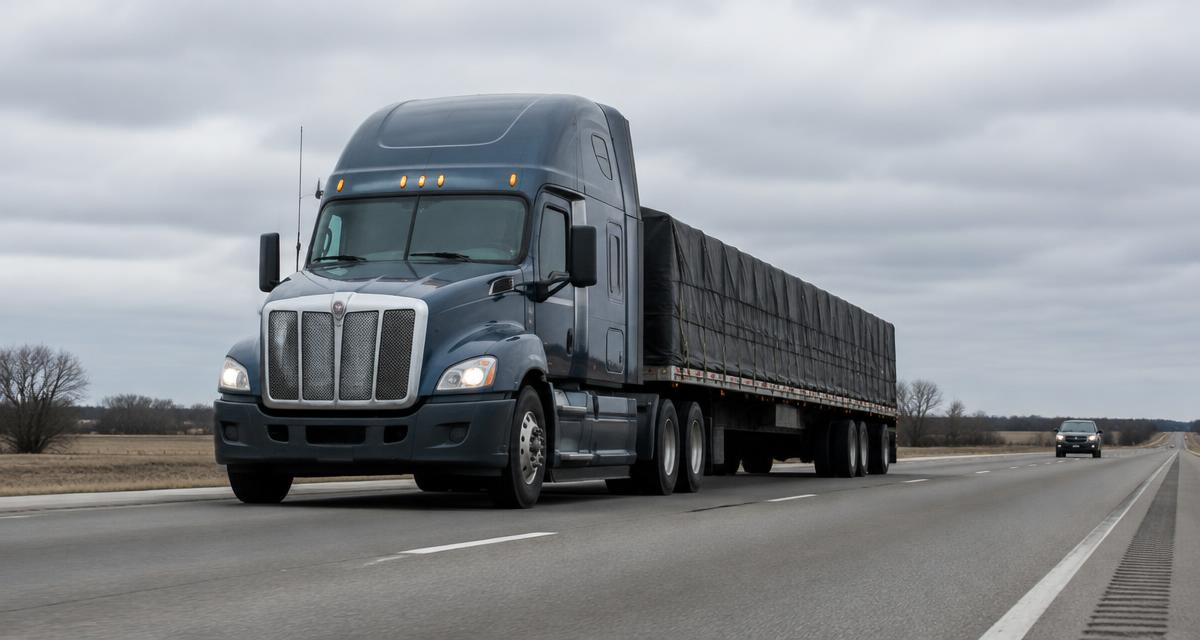
A fully loaded tractor-trailer can weigh up to 80,000 pounds on the Interstate System under federal weight limits (23 CFR 658.17). A typical passenger car weighs a fraction of that. When the two meet in a Missouri crash, the legal claim that follows looks nothing like an ordinary two-car accident. These claims run on different rules, involve different evidence, name different defendants, and move on a faster clock. If you or a family member was hurt in a truck crash in Missouri, here is what makes these cases different, and what that difference means for you.
Two layers of law govern the same crash
Every crash on a Missouri road is judged under Missouri negligence law. Truck crashes add a second layer: federal safety regulations. Under RSMo 307.400, commercial motor vehicles in Missouri must be equipped and operated as required by 49 CFR Parts 390 through 397, the Federal Motor Carrier Safety Regulations. So a Missouri truck case can turn on rulebooks that never come up in a car accident case.
The most important federal rules are the hours-of-service limits in 49 CFR Part 395. Property-carrying drivers may drive no more than 11 hours after 10 consecutive hours off duty, may not drive beyond the 14th consecutive hour after coming on duty, must take a 30-minute break after 8 cumulative hours of driving, and are capped at 60 on-duty hours in 7 days or 70 hours in 8 days. Driver fatigue is a leading cause of truck crashes, and an hours-of-service violation is powerful evidence of negligence. Most drivers must now use electronic logging devices (ELDs) under 49 CFR 395.8, which create digital duty records that can be pulled after a crash.
49 CFR Part 391 also requires carriers to keep driver qualification files, including the driver's commercial license, medical certification, and driving history, and to inspect and maintain their vehicles. When a company rushes hiring or skips maintenance, the proof is often sitting in its own files.
There is rarely just one defendant
In a car accident, the other driver is usually the whole case. In a truck wreck, the driver is only the starting point. Missouri law holds employers responsible for negligence their employees commit on the job, so the motor carrier that employs the driver is typically a defendant as well. Depending on the facts, others may share responsibility: the company that owns or leases the trailer, the shipper or freight broker that arranged the load, the shop that serviced the brakes, or the manufacturer of a defective part. A proper truck case investigates every link in that chain.
The most important evidence can disappear fast
In a car accident, the key evidence is mostly at the scene. In a truck case, the most valuable evidence lives inside the trucking company's systems: ELD records, the engine control module (the truck's 'black box,' which can record speed and braking data), dispatch communications, inspection and maintenance records, and the driver's qualification file. Some of this data can be overwritten or discarded quickly under federal record-retention schedules.
That is why a preservation letter, sometimes called a spoliation letter, should go to every company involved as soon as possible. The letter puts them on notice to preserve everything tied to the truck, the driver, the load, and the trip. If the letter goes out late, the records may be gone, and proving driver fatigue becomes far harder. When truck wreck lawyers say these cases are won in the first 30 days, this is what they mean.
The insurance is bigger, and so is the fight
Missouri requires drivers to carry minimum liability insurance of 25/50/25 under RSMo 303.190: $25,000 per person and $50,000 per accident for bodily injury, plus $25,000 for property damage. Commercial trucking is a different world. Federal law requires interstate for-hire carriers to carry at least $750,000 in liability coverage (49 CFR 387.9), and many carriers carry several million dollars in layered policies.
Larger policies mean larger potential recoveries, but the other side's response is immediate and aggressive. Carriers often send investigators to the crash scene within hours, while the injured person is still receiving treatment. Counsel who can match that response speed matters.
Serious injuries change the legal math
The weight difference explains the injuries: spinal cord damage, traumatic brain injuries, fractures, and fatalities are common in truck wrecks. Catastrophic injuries require future medical care, rehabilitation, lost earning capacity, and long-term disability to be valued before the case is resolved. Settling before the full picture is known is one of the costliest mistakes a truck wreck victim can make.
Missouri gives injured people five years to file a personal injury lawsuit under RSMo 516.120(4), but that generous deadline is not a reason to wait. The preservation problem described above cannot wait five years.
Missouri also follows pure comparative fault. Under Gustafson v. Benda, 661 S.W.2d 11 (Mo. 1983), and RSMo 537.765, your own fault reduces your recovery but does not eliminate it. If you are found 20 percent at fault, your damages are reduced by 20 percent, not wiped out. Trucking companies know this rule, so their investigators work hard to push blame onto the injured driver. Early, independent evidence is the counterweight.
Hypothetical example, for illustration only
The following is a hypothetical example for illustration only. It is not a real firm case and does not predict any outcome. A commuter is stopped at a light on I-70 near St. Louis when a tractor-trailer rear-ends her. But the deeper case comes from the federal layer: the driver's ELD data shows he was in the 13th hour of his on-duty window, and the carrier's maintenance file shows the brakes were flagged in an inspection two weeks earlier but never repaired. In a car-on-car case, liability might turn on the police report and witness statements. Here, hours-of-service and maintenance records become central evidence, and the carrier faces liability both for its driver's conduct and for its own failures.
What to do in the first days after a truck wreck
- Get medical attention even if you feel okay. Some serious injuries appear days later.
- Report the crash to the police and get the report number.
- Photograph the scene, the vehicles, the truck's company name and DOT number, and your injuries if you can.
- Do not give a recorded statement to the trucking company's insurer before talking to a lawyer.
- Keep every medical record, bill, and note about missed work and symptoms.
- Contact a lawyer experienced with truck claims quickly, so preservation letters go out before electronic records are lost.
Frequently asked questions
Q: How long do I have to file a truck wreck lawsuit in Missouri?
A: Missouri law gives you five years from the date of injury for most personal injury claims (RSMo 516.120(4)). But truck evidence disappears much faster, so do not wait.
Q: Who can I hold responsible after a truck wreck?
A: Potentially the driver, the motor carrier, the trailer owner, the shipper or freight broker, a maintenance company, or a parts manufacturer. A thorough investigation determines which parties had a role in the crash.
Q: The trucking company says I was partly at fault. Is my case over?
A: No. Missouri follows pure comparative fault, so your own fault reduces your recovery but does not bar it (Gustafson v. Benda; RSMo 537.765). Fault percentages are negotiable, and early evidence often shifts the picture.
Q: What is the most important evidence in a truck wreck case?
A: Electronic logging device data, the truck's engine control module data, hours-of-service records, inspection and maintenance records, and the driver's qualification file. Much of it is in the carrier's hands, so a preservation letter should go out fast.
Talk to Williams Law
If you or a loved one was hurt in a truck wreck in Missouri, you need counsel who understands both Missouri law and the federal regulations that govern trucking. Call Williams Law at 888.249.9901 or visit www.williamslawusa.com. Williams Law is licensed in Missouri and Texas.
The choice of a lawyer is an important decision and should not be based solely upon advertisements.