What to Do After a Car Accident in Texas: A Step-by-Step Guide
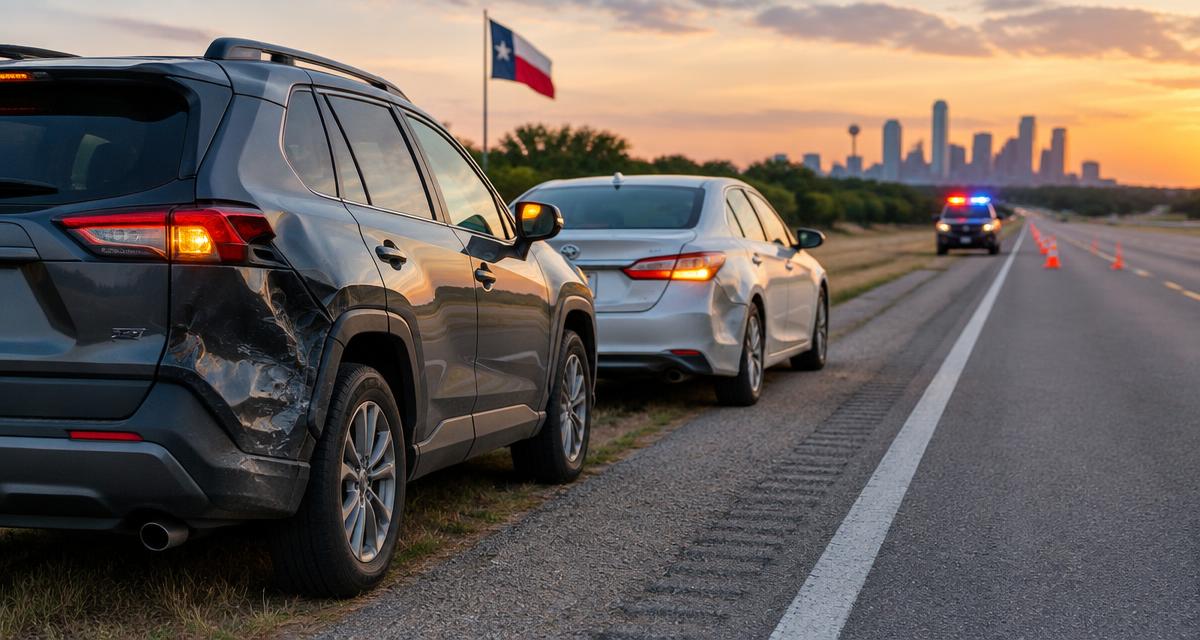
Whether it happens on I-35, the Katy Freeway, or a quiet neighborhood street, a car crash leaves most people shaken and unsure what to do next. The steps you take in the minutes, days, and weeks after a Texas accident matter — for your health and for any claim you may bring. Texas law imposes specific duties at the scene of a crash, and Texas deadlines for injury claims are strict. Here is what to do.
1. Put safety first
Before anything else, protect yourself and others. If your vehicle is drivable and it is safe to do so, move it out of traffic. Turn on your hazard lights. Check yourself and your passengers for injuries, then check on the people in the other vehicle. If anyone may be hurt, call 911 and ask for emergency medical help right away. Do not move someone who appears seriously injured unless they are in immediate danger.
2. Know your legal duties at the scene
Texas law does not treat leaving the scene as a minor matter. Under Texas Transportation Code §550.021, if a crash results in injury or death — or is reasonably likely to — every driver involved must immediately stop at the scene or as close as possible, return to the scene if they drove on, determine whether anyone needs aid, and remain there until they have complied with the information-sharing duties below. Failing to stop can be charged as a felony when someone is killed or seriously injured, and as a jailable offense for lesser injuries.
Under Texas Transportation Code §550.023, a driver involved in a crash must give the other people involved their name and address, the registration number of the vehicle they were driving, and the name of their motor vehicle liability insurer; show their driver's license if asked and it is available; and provide reasonable assistance to anyone injured — including arranging transportation to a physician or hospital when treatment appears necessary or the injured person requests it.
3. Document everything you can
Evidence disappears fast. Use your phone to photograph all vehicles and their damage, skid marks, debris, road conditions, traffic signs and signals, and any visible injuries. Write down the time, location, and weather. Get names and phone numbers of witnesses before they leave. If police respond, note the officer's name, badge number, and the report number so you can obtain the crash report later.
4. Get medical care — even if you feel fine
Adrenaline can mask pain, and injuries like whiplash, concussions, and soft-tissue damage often appear hours or days later. See a doctor promptly and follow through with recommended treatment. Beyond your health, medical records create the link between the crash and your injuries — a gap in treatment is one of the first things an insurance company will use against a claim.
5. Be careful what you say
Do not apologize or tell anyone the crash was your fault. Fault is a legal conclusion, and early statements made while shaken are hard to take back. Stick to the facts when speaking with police. You are not obligated to give a recorded statement to the other driver's insurance company, and adjusters are trained to use your words to minimize your claim. It is wise to get legal advice before giving any statement.
6. Notify your insurer and understand the coverage picture
Report the crash to your own insurance company promptly — your policy likely requires timely notice. Texas is an at-fault state, which generally means you pursue the at-fault driver's liability insurance for your losses. Texas requires drivers to carry minimum liability coverage of $30,000 for bodily injury to one person, $60,000 for bodily injury to two or more people in one crash, and $25,000 for property damage (Texas Transportation Code §601.072). Those minimums are often far too low for a serious crash, which is why your own uninsured/underinsured motorist coverage can be critical. If the at-fault driver has no insurance or too little, your UM/UIM coverage may be your path to recovery.
7. Watch the clock: Texas gives you two years
Under Texas Civil Practice and Remedies Code §16.003, you generally must file a personal injury lawsuit within two years of the date the crash occurred. If the deadline passes, you can lose your right to recover entirely — no matter how strong your case. Insurance negotiations do not pause this deadline, so do not let months of back-and-forth with an adjuster lull you into missing it.
8. Talk to a lawyer before you sign or settle
Consider getting legal advice if you were injured, fault is disputed, the other driver is uninsured, or an insurer is pressuring you to settle quickly. An early consultation can protect you from mistakes that are difficult to undo later.
Frequently asked questions
Q: Do I have to call the police after a car accident in Texas?
A: If anyone is injured or killed, call 911 — your duties under §550.021 apply, and an official record helps any claim. For property-damage-only crashes, call if the damage is significant or the other driver is uncooperative. If officers do not respond, document everything yourself and ask about filing a crash report.
Q: What if the other driver has no insurance?
A: You may be able to turn to your own uninsured/underinsured motorist coverage if you carry it. Without it, your options narrow considerably — which is why confirming your UM/UIM coverage before a crash matters, and why prompt legal advice after one is important.
Q: How long do I have to file a lawsuit after a Texas car accident?
A: Generally two years from the date of the crash under Texas Civil Practice and Remedies Code §16.003. Do not wait — evidence fades, witnesses become hard to find, and the deadline is strict.
Q: Should I give a recorded statement to the other driver's insurance company?
A: You are not required to, and anything you say can be used to reduce or deny your claim. Get legal advice first.
Call Williams Law
If you were hurt in a Texas car crash, call Williams Law at 888.249.9901 or visit www.williamslawusa.com to discuss your situation.
The lawyer responsible for the content of this page is Shanelle Williams of Williams Law. Williams Law's primary office is in St. Louis, Missouri.
The choice of a lawyer is an important decision and should not be based solely upon advertisements.